Blocked Gutters in Wrexham and the Damp They Cause
Next time it pours, stand outside and watch your gutters for a minute. If water's spilling over the front edge instead of running to the downpipe, you've got a blockage, and your walls are paying for it.
In a place as wet as Wrexham, that overflow adds up quicker than you'd think.
The quick answer: Blocked gutters can't carry rain away, so it spills down your walls, soaks into the brick, and leads to damp, rot, and staining. In Wrexham's wet climate, gutters fill fast with moss washed off the roof, leaves from mature trees, and general grime. Clearing them a couple of times a year keeps water flowing where it should and protects the house underneath.
1. What a gutter is actually for
Gutters do one simple job. They catch the rain running off your roof and send it down the pipe and away from the building. That's it, but it matters more than most people give it credit for.
When they're clear, the water goes where it should and your walls stay dry. When they're blocked, all that water has to go somewhere, and somewhere usually means straight down the face of your house.
A gutter that can't drain isn't just useless. It actively makes things worse.
2. Why Wrexham gutters clog so fast
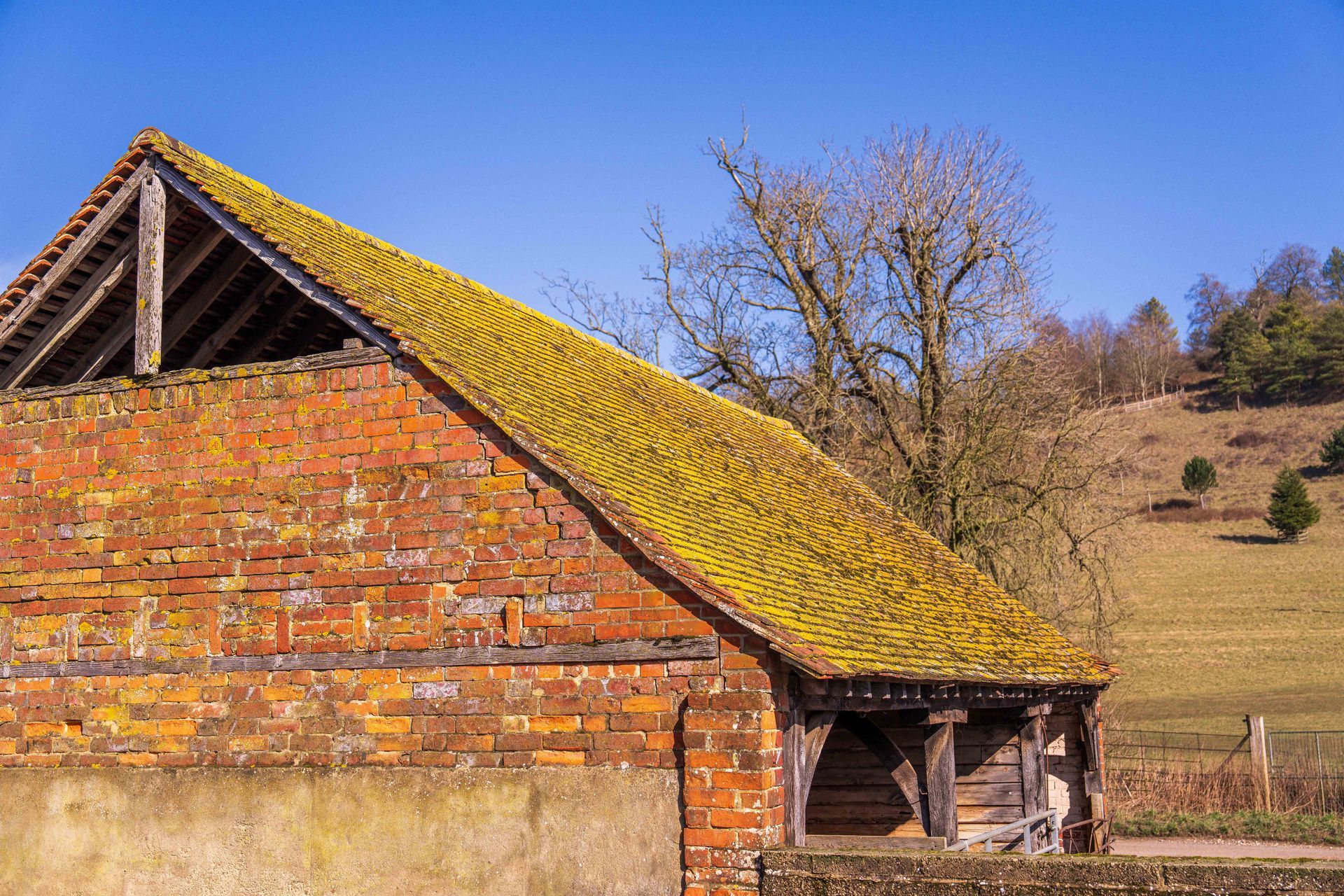
This corner of north Wales throws a lot at your guttering. All that rain washes moss and grit off the slate, and it collects in the gutter as a heavy, wet sludge. The more moss on your roof, the faster this happens.
Trees add the rest. Wrexham has plenty of mature trees around its older streets and parks, and every autumn they drop leaves that pile straight into open gutters. Mix wet leaves with roof moss and you get a dam in no time.
Then the damp climate keeps it all soggy. Nothing dries out, so the muck sits there, packs down, and holds even more water.
3. Damp walls are the first sign of trouble
The most common thing blocked gutters cause is damp walls. Water pours over the edge, runs down the brickwork, and over time soaks in. You'll see dark patches outside and sometimes damp showing through on the inside wall.
Older Wrexham houses are more exposed to this. Solid brick walls with no cavity, which a lot of the terraces have, let damp travel through far more easily than modern construction.
Once a wall's holding water, it's slow and awkward to dry out. Far easier to keep the water off it in the first place.
4. Rot, leaks, and the damage you don't see
Overflowing gutters don't stop at the walls. Water spilling near the roof edge gets into the fascia and soffit boards, the timber right at the eaves, and that timber starts to rot. Left long enough, the guttering itself can pull away from the wall.
Water also tracks back under the roof edge, into the loft space, and towards the timbers holding everything up. That's where a small blocked gutter turns into a proper repair bill.
Honestly, gutter cleaning is one of the cheapest jobs you can do for your house, and skipping it causes some of the priciest damage. That trade-off makes no sense to me.
5. Winter makes a blockage worse
A blocked gutter is bad in autumn. In a north Wales winter it's worse. Water trapped in a clogged gutter freezes, expands, and can crack or split the guttering along its length.
Frozen blockages also add weight. A gutter full of sodden leaves and ice is heavy, and that strain loosens the brackets holding it to the wall. Come the thaw, you can find sections sagging or hanging off.
Clearing gutters before the cold sets in saves you all of that. It's one of the simplest bits of winter prep going.
6. How often to clear them and what it involves
For most Wrexham homes, twice a year works well. Once in late autumn after the leaves have come down, and once in spring to clear the winter's build-up. Homes under heavy tree cover might need it more.
The job means clearing the debris out, flushing the gutters through, and checking the water actually reaches the downpipe. It's also a good moment to spot any moss problem on the roof feeding the mess.
Worth keeping an eye on:
- Overflow in rain: water spilling over the front edge is the clearest sign of a blockage.
- Green streaks on walls: stains running down from the gutter line point to regular overflow.
- Plants growing in the gutter: if grass or weeds are sprouting up there, it's long overdue.
- Sagging sections: a gutter pulling away from the wall usually means it's heavy with debris.
- Damp inside: patches on upstairs walls can trace back to guttering outside.
Frequently Asked Questions
How often should I clean my gutters in Wrexham?
Twice a year suits most homes, in late autumn and spring. Houses with lots of trees or heavy roof moss may need clearing more often.
Can blocked gutters really cause damp inside the house?
Yes. Water overflowing onto the walls soaks into the brick, and on older solid walls that damp can show through inside.
Why do my gutters fill up so quickly?
Moss washing off the roof, leaves from nearby trees, and the constant damp all combine. Wet north Wales weather keeps it packed in the gutter.
Is gutter cleaning worth paying for?
It's cheap next to the damp, rot, and repair costs that blocked gutters cause. Prevention is far less hassle than a fix.
Should I clear gutters before winter?
Definitely. Clogged gutters freeze, crack, and sag under the weight. Clearing them in autumn avoids a lot of cold-weather grief.
Clear gutters are the cheapest protection your house has
Blocked gutters cause damage way out of proportion to how easy they are to sort. In Wrexham's wet, tree-lined streets they fill fast, so a couple of clears a year keeps the water moving and your walls dry.
Water spilling over your gutters every time it rains?
Ben's Roof Cleaning works across Wrexham and North Wales, with over 15 years of experience. Get in touch or call 01978 547208
for a free, no-obligation quote.