Soft Washing vs Pressure Washing on Wrexham Roofs
You've decided the moss has to go, and now you're weighing up how. Pressure washing sounds fast and satisfying. Soft washing sounds gentler but slower.
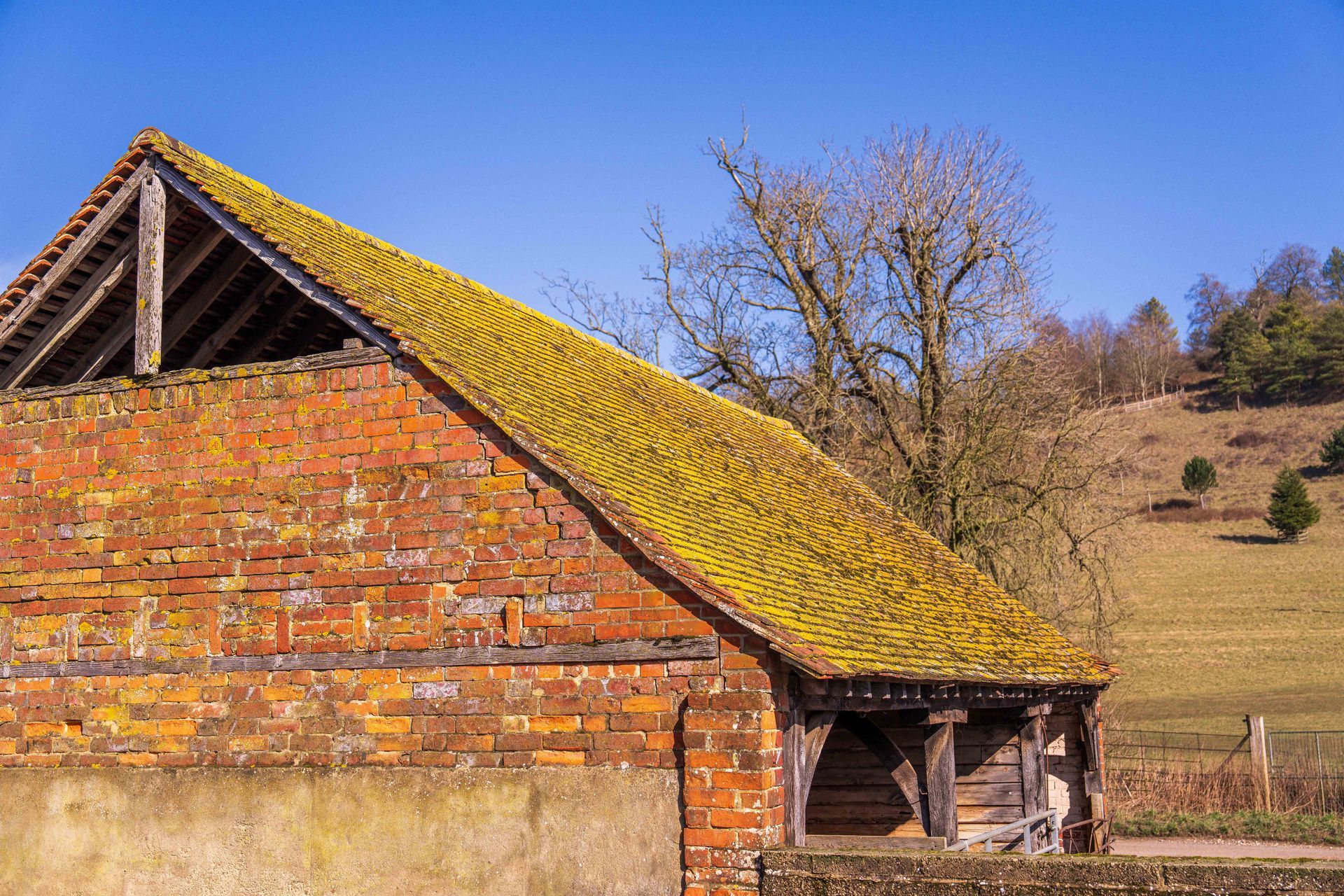
On a Wrexham roof, that choice matters more than most people realise, especially if your slate has been up there since the mining days.
The quick answer: Soft washing uses low-pressure water plus a biocide to kill moss and algae at the root, while pressure washing blasts it off with sheer force. On old Welsh slate, high pressure can crack tiles, strip the surface, and drive water underneath. Soft washing clears the growth without that damage, and it keeps the roof cleaner for longer. For most Wrexham homes, low pressure wins.
1. What pressure washing actually does
Pressure washing forces water out at high speed to physically knock moss, dirt, and algae off a surface. On a patio it's brilliant. On a roof, the same force that shifts moss also hits your tiles hard.
The green vanishes fast, which is why it looks so tempting. But that speed comes from raw force, and force is exactly what an old roof doesn't want.
What you're really doing is trading a quick result for a bit of the roof's lifespan every time.
2. Why that's a problem for Welsh slate
Most of Wrexham's older houses wear Welsh slate, a lot of it Victorian and thinned by a century of weather. That slate is tough for its age, but it's brittle, and a high-pressure jet can crack it or blow the flaky top layer clean off.
There's a worse issue too. A strong jet drives water up under the slates, past where the roof is meant to keep it out. That water soaks into felt, timber, and old nail beds, and now you've caused damp instead of curing it.
And here's the bit people forget. Old slate can't be swapped like for like easily. Matching original Welsh slate is a hassle, so a cracked tile is a real loss.
3. How soft washing works instead
Soft washing takes the force out of the equation. It uses water at low pressure, closer to a heavy garden hose than a jet, together with a treatment that does the actual work of killing the moss.
That biocide kills moss, algae, and lichen at the root. Over the following days and weeks the dead growth loosens and washes off in the rain, which north Wales is never short of. No hammering, no cracked tiles.
It feels less dramatic on the day. But the roof ends up just as clean, and it stays in one piece.
4. The results last longer with soft washing
Here's the part that surprises people. Blasting moss off with pressure only removes what's on the surface. The roots and spores stay behind, so in a damp climate like Wrexham's the green comes creeping back fast.
Soft washing kills the growth properly. Because the biocide reaches the root, regrowth is much slower, and you go far longer before you're looking at green patches again.
So the slower method actually saves you cleans over time. In my book that's the whole point.
5. When a bit more pressure has its place
None of this means pressure washing is always wrong. On the right surface it's a genuinely useful tool. Concrete drives, hard paving, and sturdy patios can take it, and it does a cracking job on those.
Even some robust modern roof tiles can handle a moderate wash. The trouble is old Welsh slate, which is exactly what covers so many Wrexham roofs, and that's where the caution comes in.
The skill is matching the method to the surface. A good cleaner reads what they're dealing with before they pick up any kit.
6. Choosing the right approach for your Wrexham home
Before any cleaning, the roof needs a proper look. How old is the slate, which way does it face, how much moss has built up, and is any of it already loose? Those answers decide the method.
For most of Wrexham's terraced and older housing, soft washing is the sensible call. It clears the moss, protects the slate, and doesn't gamble with a roof that's hard to repair.
Quick guide to keep in mind:
- Old Welsh slate: soft washing every time, since the tiles can't take high pressure.
- Modern concrete tiles: often fine with a gentler wash, but still no need to blast.
- Patios and drives: pressure washing suits these hard surfaces well.
- Heavy moss: a biocide treatment does more lasting good than brute force.
- Not sure: get it assessed first rather than guessing with a hired jet wash.
Frequently Asked Questions
Is soft washing as effective as pressure washing?
For moss and algae, yes, and it lasts longer. The biocide kills growth at the root, so it clears fully and stays away longer.
Will soft washing damage my slate?
No. The low pressure and root-killing treatment are designed to be gentle, which is exactly why they suit old Welsh slate.
Why does the moss not disappear straight away with soft washing?
The treatment kills it first, then the dead moss washes off gradually with rain over the following weeks. The delay is normal.
Can I pressure wash my own roof to save money?
On old slate it's a real risk. Cracked tiles and water forced under the roof cost far more to fix than a proper clean.
Does soft washing work in Wrexham's wet weather?
It does, and the rain even helps rinse the dead growth away. The treatment does its job whatever the north Wales sky is doing.
The gentle method protects the roof you already have
Pressure washing looks impressive for an afternoon. Soft washing keeps your Welsh slate intact for years. On the older roofs that fill Wrexham's streets, that's an easy choice once you know what's at stake.
Not sure which method your roof needs?
Ben's Roof Cleaning works across Wrexham and North Wales, with over 15 years of experience. Get in touch or call 01978 547208
for a free, no-obligation quote.