Wrexham's Mining-Era Terraces and Their Welsh Slate Roofs
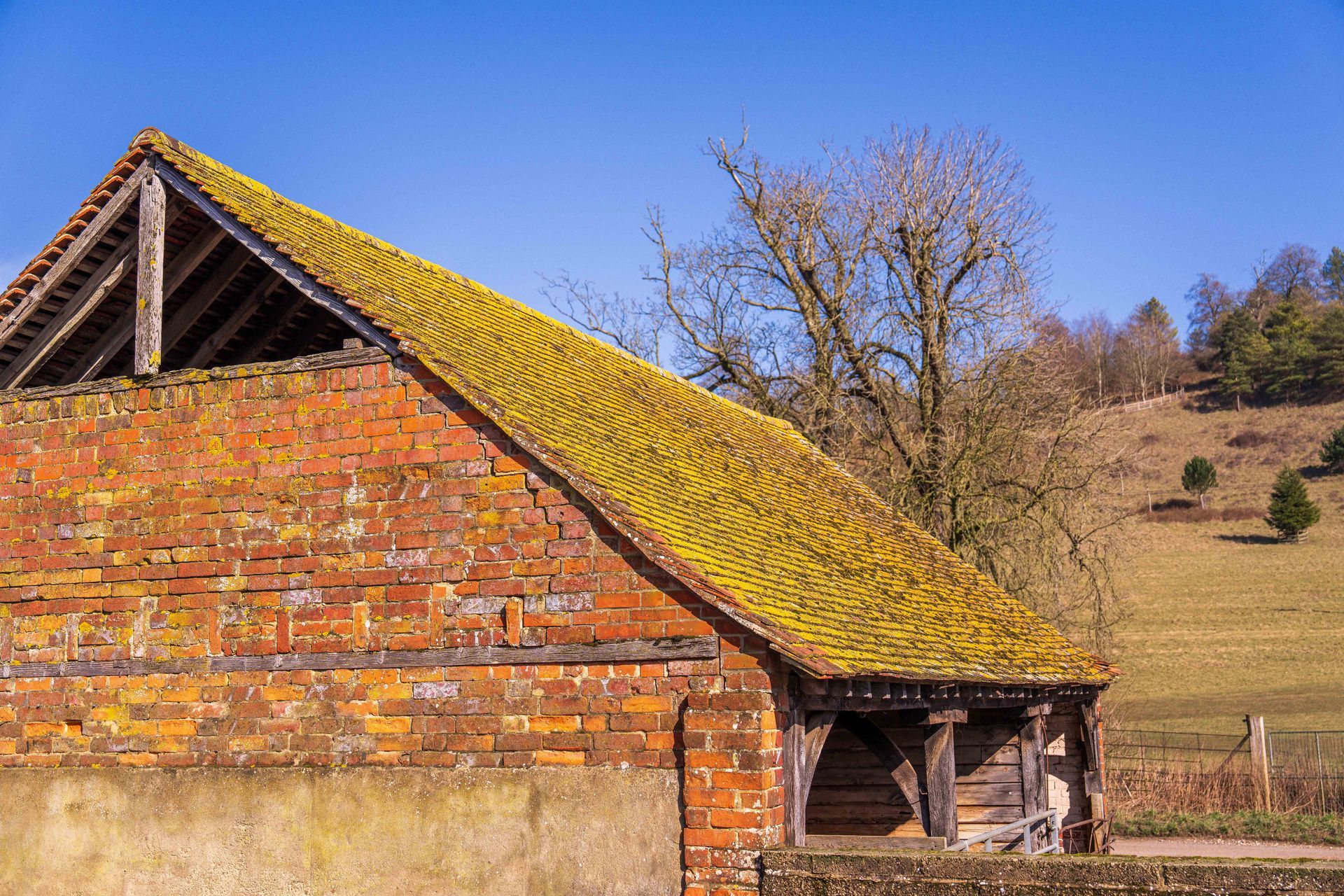
Walk almost any older street in Wrexham and you'll see them. Long rows of brick terraces, roofs lined with grey Welsh slate that's been up there since the coal was still coming out of the ground.
If your house is one of them, your roof has a bit of history to it. And that history changes how you should look after it.
The quick answer: Wrexham's mining-era terraces mostly wear original Welsh slate, which is tough but old, brittle in places, and set on steep, tightly packed roofs. Cleaning them safely means low-pressure soft washing rather than harsh jets, careful work at height, and clearing the gutters that these long rows share. Done right, that slate can keep going for decades more.
1. Why Wrexham has so many terraced roofs
Coal built this town. Wrexham sat at the centre of the Denbighshire coalfield, and as the pits and ironworks grew through the 1800s, thousands of workers needed homes close by. Whole streets of terraced housing went up quick to meet that demand.
Those terraces are still standing, and most keep their original roofs. That's a lot of Victorian slate spread across the town, all roughly the same age and facing the same weather.
So when people ask why Wrexham has such a distinct look from above, the answer is simple. It was a working town, and it was built to house workers.
2. What Welsh slate actually is
Welsh slate isn't just any roofing material. It was quarried across north Wales and became known worldwide for how well it holds up. Split thin, laid right, it sheds water and shrugs off weather better than almost anything else of its time.
That's why it ended up on so many roofs here. The stuff was local, it was proven, and it lasted. Plenty of Wrexham slate has already done well over a hundred years of service.
But age catches up with any material. Old slate grows brittle, the fixing nails rust, and individual tiles work loose. That's the state a lot of these roofs are in now.
3. Why old slate needs a gentle touch
New concrete tiles can take a fair bit of rough handling. Century-old Welsh slate can't. It's thinner, it's weathered, and a heavy knock or a strong jet of water can crack it or knock the surface off.
This is where a lot of roof cleaning goes wrong. Someone turns up with a pressure washer, blasts away, and the moss comes off along with bits of slate and the nail beds get soaked. The roof looks clean for a season, then tiles start slipping.
My view is straightforward. If a roof has survived since the mining days, it deserves cleaning that respects its age, not a quick blast that shortens its life.
4. Soft washing suits these roofs best
Soft washing is the method that fits Wrexham's older slate. Instead of force, it uses low-pressure water and a biocide treatment that kills moss, algae, and lichen at the root. The growth dies back and clears gradually, without hammering the tiles.
The gentle part matters most on brittle slate. There's no jet driving water under the tiles, no impact cracking thin stone. The slate stays put, and the roof carries on doing its job.
It also lasts longer between cleans. Because the treatment kills the roots rather than just scraping the top, the moss takes far longer to come back.
5. The access problem with terraced rows
Terraces bring their own challenge, and it's not the slate. It's getting to it. These roofs are steep, they run in long connected rows, and access from the street or a narrow back yard is often tight.
Working safely up there needs the right ladders, the right kit, and someone who's used to reading an old roof. It's not the sort of job to attempt off a wobbly ladder on a wet Wrexham morning.
Shared valleys and party walls add to it. On a terrace, water and moss don't respect the boundary between your house and next door, so a proper clean has to take the whole run into account.
6. Keeping a historic roof going
Looking after old slate isn't complicated, but it does need doing. Regular gentle cleaning keeps moss from building into thick, water-holding mats. Clearing the gutters stops damp backing up under the eaves.
Catching loose or slipped tiles early saves a lot of grief later. One gap lets water in, and on a roof this age that water finds its way to the timbers fast.
A few habits keep these roofs healthy:
- Clean gently: soft washing protects brittle slate that a jet would crack.
- Watch the gutters: long terraced runs collect moss and leaves that block drainage.
- Spot slipped tiles: old fixing nails rust and let slate slide, so a quick look up now and then helps.
- Respect the age: a hundred-year-old roof needs care, not a rushed blast.
- Use local know-how: someone who works on Wrexham slate day to day knows how it behaves.
Frequently Asked Questions
Is my Wrexham terrace likely to have original slate?
Many do. A lot of the town's terraces still wear their Victorian Welsh slate, though some have been re-roofed with modern tiles over the years.
Can old slate really be cleaned safely?
Yes, with the right method. Low-pressure soft washing removes moss and algae without the impact that damages brittle slate.
Why not just pressure wash it and be done?
High pressure can crack aged slate, strip its surface, and drive water under the tiles. On a historic roof that does more harm than good.
Do you need to clean next door's roof too?
Not necessarily, but on a terrace the roofs connect. Moss and shared gutters mean the whole run is worth thinking about.
How do I know if a tile has slipped?
Look for gaps, dark patches, or a tile sitting out of line. If you spot damp inside near the roof, get it checked.
Old slate is worth protecting, so treat it kindly
Wrexham's terraced roofs are a piece of the town's mining story, still doing their job a century on. Clean them gently, keep the gutters clear, and that Welsh slate has plenty of years left in it.
Got an old slate roof that needs a careful clean?
Ben's Roof Cleaning works across Wrexham and North Wales, with over 15 years of experience. Get in touch or call 01978 547208
for a free, no-obligation quote.